

The Benefits of Electric Vehicles
Electric vehicles emit no tailpipe emissions, and can reduce air pollution and oil consumption. EVs also cost less to drive than gas-powered vehicles and are quieter.
There are many models for those looking to make the switch to an electric vehicle. From sports cars to luxury sedans, and family hatchbacks, there is something to suit all. And range anxiety is quickly becoming a thing of the past as long-range EVs have become cheaper and easier to drive.
The products are eco-friendly.
Since EVs emit no carbon dioxide or other pollutants through their tailpipes, they are more environmentally friendly compared to cars that run on gas. However, they have certain environmental costs. They are powered by massive batteries that utilize rare metals such as lithium, nickel and cobalt. They are mined from activities that cause water pollution, as well as other negative impacts.
Despite these challenges, electric vehicles are becoming more popular as a result of advances in battery technology. Newer batteries are lighter, more energy dense and longer-lasting. They also have a longer lifespan than older models. They are also charged more quickly than earlier models.
In addition to their low emission, EVs have many other environmental advantages. They help reduce noise pollution and do not pollute air with exhaust fumes. Moreover, they do not require an extensive amount of maintenance and have less moving parts than traditional gas-powered vehicles. They are also less expensive to run. Electric vehicles' fuel costs are lower than those of conventional vehicles. Some utilities offer discounts or rebates to customers who charge their cars at off-peak times.
The primary reason EVs have less environmental impact is due to the fact that they do not burn fossil fuels. They instead rely on rechargeable lithium-ion batteries to power their motors. The process of making these lithium-ion batteries, ranging from mining the raw materials to building giant factories and transporting them, creates a significant amount emissions. The good news is that the production of these battery is growing quickly.
Another important aspect in EVs green potential is that electricity is generally more renewable than fossil fuels. Thus, EVs produce significantly fewer greenhouse gases than conventional vehicles, particularly in countries with cleaner energy sources.
Regardless of the country the emissions from an EV are much lower than those of vehicles powered by a fossil fuel engine. This is because the majority of greenhouse gas emissions from an EV's operation are tied to the power sector. Electric vehicles will also reduce carbon emissions like the power sector. A recent study showed that, for 95% of world's driving scenarios, EVs are better for the environment than gasoline-powered vehicles.
It is easy to drive
Electric vehicles are easier to drive than gasoline-powered vehicles. They require less maintenance, for example. Traditional internal combustion engines have hundreds of moving components, with tight tolerances that must work together. The drivetrain of an EV has just 17 moving parts. They are also more quiet, and don't emit any emissions while driving. This makes them perfect for running errands, commuting and even road excursions.
Most EVs can be recharged at home, using a standard 120V outlet. Some also come with 240 V charging stations that allow you to charge your car in about half the time as it takes to fill up gasoline tanks. Public charging stations are also accessible, and are being built across the nation. Many roadside assistance services (including those provided by insurers and automakers) will tow your electric vehicle to a charger if the battery is not strong enough to be unsafe to drive.
Many owners of electric vehicles say that their vehicles are fun to drive with instant torque and powerful acceleration. They can also travel for a long distance without charging, which makes them a great option for road trips and for commuting.
The only drawback to EVs is that they have a lower driving range than gasoline-powered vehicles. However, manufacturers are working to improve this, and a growing number of charging stations that are public can help you plan your trips with more confidence. For those who still have concerns about range anxiety Some EVs have features that reduce energy consumption, such as switching off heating and air conditioning while on the highway.
Another great benefit of EVs is their ability to power appliances and other devices in the home using vehicle-to-load (V2L) technology. This is particularly beneficial in the event of power shortages. EVs also are more quiet than conventional vehicles and create less vibrations, which can be annoying for passengers.
Most EVs aren't able to be driven until their batteries are completely depleted however, they will alert drivers with messages and chimes long before the battery has gone out. Many roadside assistance companies can tow your electric vehicle if you're stuck at a charging station, or to your home.
They are affordable
An electric vehicle is a great investment for your health, the environment, and your wallet. It's less expensive to operate than a gas-powered car and is safer for the occupants. However, you should know that electric vehicles can be costly to purchase, particularly when you make use of public charging stations. Financial experts suggest that you limit your spending to no more than 20 percent of your earnings on transportation. This includes a monthly car payment as well as insurance and fuel.
The cost of electric cars are falling rapidly, thanks to the increase in competition and lower costs for raw materials. In addition federal tax credits of up to $7,500 which are often augmented by thousands of dollars in state incentives, drive prices down even more.
When comparing the cost of an EV to a conventional vehicle its efficiency rating is also important. This measure is based upon the number of kilowatts of electric power a vehicle consumes each 100 miles. It is similar to the mile-per gallon figure for a traditional vehicle. The more efficient an electric vehicle is the lower you'll pay on fuel.
Electric vehicles' range increases as battery technology improves. Consumers are demanding higher range and manufacturers are pushing for economies of scale in order to make the technology affordable. This has led to the emergence of a "range-war" in the luxury market, where manufacturers are advertising cars with long driving distances. The Tesla Model S, for instance, offers 405 miles of range, while the new Lucid Air boasts 516 miles.
Electric cars can be extremely expensive, from the entry-level Nissan Leaf to the Porsche Cayenne EV. In general, they are about 15 percent more expensive than comparable gasoline-powered vehicles. But the price gap will continue to narrow, as battery production costs fall and manufacturers seek to establish dominance on the market.
Additionally, the costs of EVs can be reduced further by installing a home charger, which can save you money over charging at public stations. Be aware of the electricity costs in your area, as it can influence your final cost estimate. If you're looking for an electric vehicle that can get you from point A to B without burning any fossil fuels, choose one that uses an outlet that is standard 120 V or connects to the charging system that runs off of your home's breaker box.
It's quick
EVs are not only efficient and clean, they're also fast. Electric motors can deliver their full power at one time, unlike traditional cars that have to build up torque over a wide range of RPMs. Electric cars are incredibly quick and especially when they have the boost button. The Genesis GV60 Sport Plus, for example, can rocket to 60 mph in just 4.0 seconds with the mighty boost mode activated.
EVs are faster than gasoline-powered cars, however this doesn't mean they can reach higher speeds. They're actually the exception rather than the rule, since most electric vehicles have very restricted top speeds to avoid overtaxing their batteries and reducing their driving range.
This is due to the fact that EVs do not require an engine. The addition of gears to the motor will make it more complicated and require it to work harder, which would result in burning more fuel. It also requires additional cooling to stop the battery from getting hot.
There are EVs which can match the speed of some of the most powerful gas cars on the planet. The Aspark Owl is a head-turner capable of reaching 100 km/h in 1.89 second thanks to its tiny battery with 64kWh and four mighty motors. The Owl is capable of reaching a top speed 400 km/h.
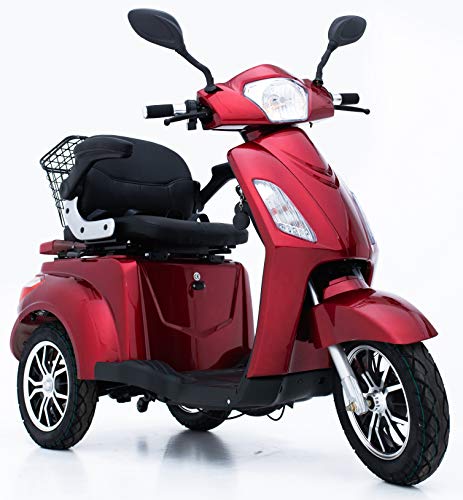
Despite their shortcomings, EVs are a good option for those looking for a stylish and eco-friendly car. They are more elegant and sleek than vehicles powered by internal combustion engines that burn fossil fuels. These vehicles are blamed for causing climate change and destruction of species. They're also more cost-effective to run over the long term and can save you money on fuel and maintenance costs. Moreover, they create far less noise than traditional engines. EVs are the consumer-friendly face of the energy transition. buy electric mobility scooters give wealthy people the opportunity to indulge in the time-honored pleasures of lavish consumption while preserving the planet while doing so.